
Picture a five-year-old glued to a rainbow after a storm. “Why does it arch like that? Why those colors? Why does it disappear?” You laugh, answer one question, and boom, another follows. That spark of wonder? It sticks around, even as adults.
You might think endless “whys” faded with childhood. Think again. Asking “why” boosts your critical analysis, fuels curiosity, and sharpens problem-solving. It turns fuzzy thoughts into clear insights.
Recent 2026 research proves it. A metacognition study shows questioning your purpose cuts biases and builds reasoned judgment. For example, EduBrain’s review highlights how regular questioning habits create independent thinkers who weigh evidence and challenge assumptions.
Students using these strategies gain confidence and handle challenges better. Adults see the same wins through practice.
In this post, you’ll uncover the science. Explore Toyota’s famous “five whys” technique and Elon Musk’s bold questioning style. Then, grab simple steps to build the habit yourself.
Regularly asking “why” rewires your brain for smarter, faster thinking. It works at your job, in daily life, and even with AI tools. Ready to see how? Keep reading.
How Asking ‘Why’ Builds Rock-Solid Critical Thinking
Repeatedly asking “why” digs deep into your thoughts. It exposes weak spots and strengthens your reasoning. You start seeing clear patterns others miss. Because this habit builds critical thinking skills, it helps you make smarter choices every day.
Spotting Hidden Biases with Simple ‘Why’ Questions
Your brain loves shortcuts. These lead to biases that cloud judgments. Ask “why” to pull them into the light.
For instance, you read a headline and nod along. Why? Because it matches what you already think. Chain the questions: Why do I trust this source? What proof backs it? Often, you find no real check, just a gut feel from past views.
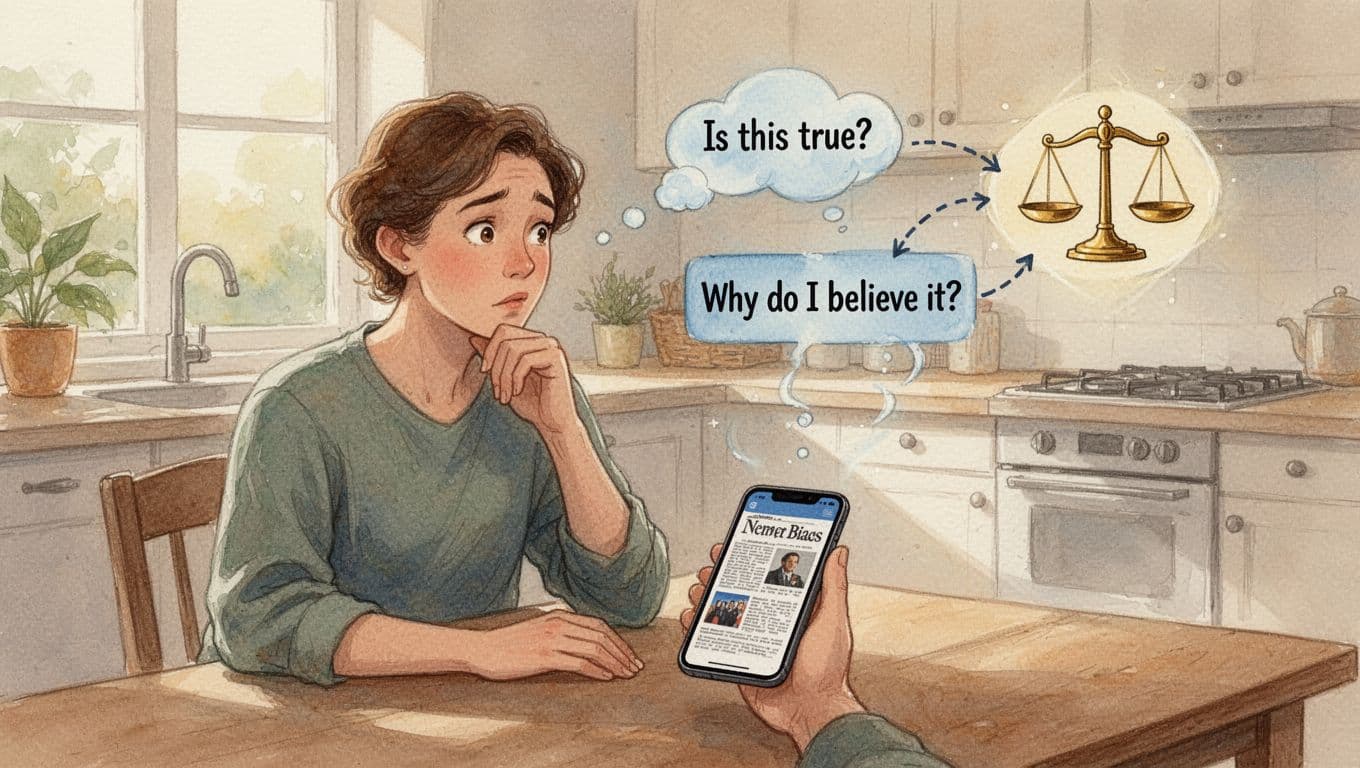
Novant Health shares a key tip for 2026: Unlearn biases by asking “Why do I believe this?” and “What evidence challenges it?” Practice turns automatic thoughts into checked facts.
Here are quick examples:
- Job interviews: You skip a candidate because they seem nervous. Why? Because nervous means unqualified? Dig deeper. Maybe stress hides skills. Why assume that? Past hires who flopped looked calm.
- Shopping choices: You grab the pricier brand. Why? It feels better quality. Why? Ads said so. Check specs instead.
- Arguments with friends: They disagree, so you tune out. Why? Their view threatens yours. Why? It questions your experiences.
Step-by-step chaining works like this:
- Spot the judgment.
- Ask “Why?” once.
- Ask again on the answer.
- Repeat until you hit facts or feelings.
This reveals root causes fast. Your challenge today: Pick one belief. Ask “why” five times. Note what surfaces.
Metacognition: Thinking About Your Thinking
Metacognition means watching your own thoughts. “Why” questions kick it off. You monitor if ideas hold up.
A 2026 EduBrain review of 30 studies shows students boosted skills by questioning evidence. They cut errors 25 to 40 percent. Passive reading? It leaves gaps. But “why” adds active checks, like in math puzzles or work reports.
Meanwhile, the ITB study calls this a top trainable skill. Groups practiced “Why does this evidence fit?” They improved bias spotting by 35 percent in four weeks.
Consider Sarah. She scrolled social media and bought into a health claim. Confusion hit later. Before: She shared it blindly. After chaining “whys” (Why this source? Why ignore studies?), clarity came. She fact-checked next time.
PISA 2026 analysis backs it. Teens with reflective “why” habits scored 15 percent higher in reasoning.
Neuroscience adds proof. These questions light the prefrontal cortex. They build strong paths for logic over quick biases. Unlike fixed IQ, practice rewires you.
Mayo Clinic’s guide on sharpening critical thinking stresses skepticism. Say “I do not know” when unsure. Then ask, “Why might I be wrong?” This cuts mistakes and clears judgments.
Everyday wins follow. Question a work email: Why react fast? Or a viral post: Why share now? Fewer errors result. You gain confidence. Start small. Your thinking sharpens quick.
Spark Curiosity and Dodge Mental Laziness in the AI Age
AI hands you answers fast. You type a question, hit enter, and copy the response. Easy, right? But that quick fix can make your brain idle. Instead, spark curiosity with “why.” It fights mental laziness and keeps your thinking sharp. You dodge the trap of blind trust in tech. Because curiosity turns AI into a tool, not a crutch.
Picture this. You ask an AI for a cake recipe. It spits out steps. But why those ingredients? Does the oven temp make sense? Poke deeper. You verify facts and tweak for better results. Small habit, big payoff.
A Stanford HAI report on 2026 AI predictions warns of info overload. AI floods us with text, images, and advice. Sorting truth from junk demands skills like checking sources and demanding explanations. Without them, mistakes pile up.
Why Curiosity Beats Relying on Tech Alone
Lazy AI use shrinks your brainpower. A 2025 MIT study tracked this. People using ChatGPT for essays showed up to 55 percent less brain activity in memory and planning areas. They copied outputs and forgot details later. Search users dropped 10 percent. Brain-only writers stayed strong.
Check the numbers:
| Measure | ChatGPT Group | Search Group | Brain-Only Group |
|---|---|---|---|
| Brain connectivity drop | Up to 55% | 10% | None (baseline) |
| Recall accuracy change | Down 32% | Down 8% | Up 5% |
| Originality (no AI) | Lowest | Medium | Highest |
Curious “why” questions reverse this. They build active habits. Goldman Sachs CIO Marco Argenti warned in 2026 to probe AI. Ask, “How did you reach that?” Humans must oversee agents to catch hallucinations.
Harvard sees AI as a thought partner. Probe with “why” for deeper ideas. It sparks innovation and better calls. Students who question AI redo projects stronger. They mix reasoning with humility. This grows mental muscle.
You gain deeper learning. Decisions improve. Playful warning: Don’t let AI do all the work, or your brain might take a nap. Start today. Ask “why” next time. Your skills thank you.
Solve Tough Problems Using Proven ‘Why’ Techniques
Tough problems stall you at work or home. Quick fixes fail. Instead, proven “why” methods uncover roots for real wins. Toyota’s Five Whys and Elon Musk’s first principles turn chaos into breakthroughs. These tools build on EduBrain’s point: questioning creates reliable fixes, not luck. You can use them too. Results beat guesswork every time.
Toyota’s Five Whys: Dig to the Real Root Cause
Toyota invented this in the 1930s. It lasts because it finds true causes. In 2026, factories pair it with AI for complex snags like robot jams or supply glitches.
Picture your car dead in the driveway. Follow these steps:
- Car won’t start. Why?
- Battery is dead. Why?
- No charge from alternator. Why?
- Bad wiring connection. Why?
- Loose battery terminal. Why? No recent check or dirt buildup.
Fix the dirt and checks. Problem gone for good.
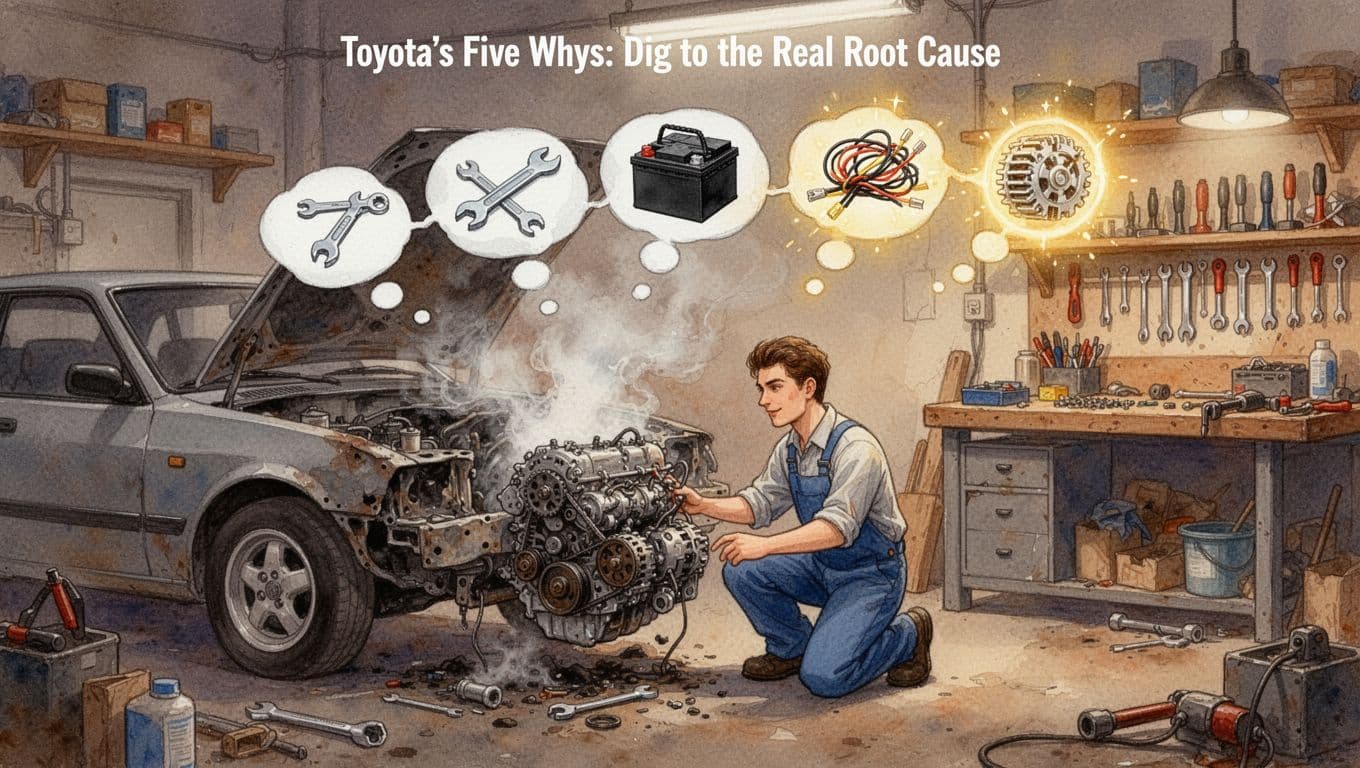
This beats band-aids. FlowFuse’s 2026 guide shows factories cut repeats by 40 percent. AI speeds it now, scanning data for whys on defects. Workers focus on big fixes. You get faster, lasting solutions.
Real story: A plant lost hours to jammed lines. Whys led to bad sensors from old data. AI update stopped it. Output jumped.
Elon Musk’s First Principles for Big Breakthroughs
Musk boils problems to basics. Ask “why” on assumptions. Build fresh from truths. This sparks innovation, especially with 2026 AI pushes.
At SpaceX, rockets cost millions. Musk asked: What are they? Aluminum, fuel, carbon fiber. Why buy whole? Make parts cheap from raw stuff. Why toss after one go? Reuse them. Falcon 9 lands and flies again. Costs dropped 10x.
James Clear breaks it down: Strip to atoms, rebuild better.
In 2026, Musk ties it to AI in space. Why Earth data centers? Solar power orbits free. xAI and SpaceX merge for that.
Compare before and after:
| Approach | Before (Assumptions) | After (Why Techniques) |
|---|---|---|
| Rocket Costs | Buy from suppliers, $60M/launch | Build basics, reuse: Under $3M |
| Factory Issue | Patch symptoms weekly | Root fix once: Zero repeats |
| Personal Goal | Diet fails, blame willpower | Why cravings? Basics fix habits |
See the shift? EduBrain notes this questioning builds pros at work fixes or life goals. Try it: Pick a stuck project. Ask why on core parts. What breaks free? Anyone wins with practice. Your tough spot? Solve it today.
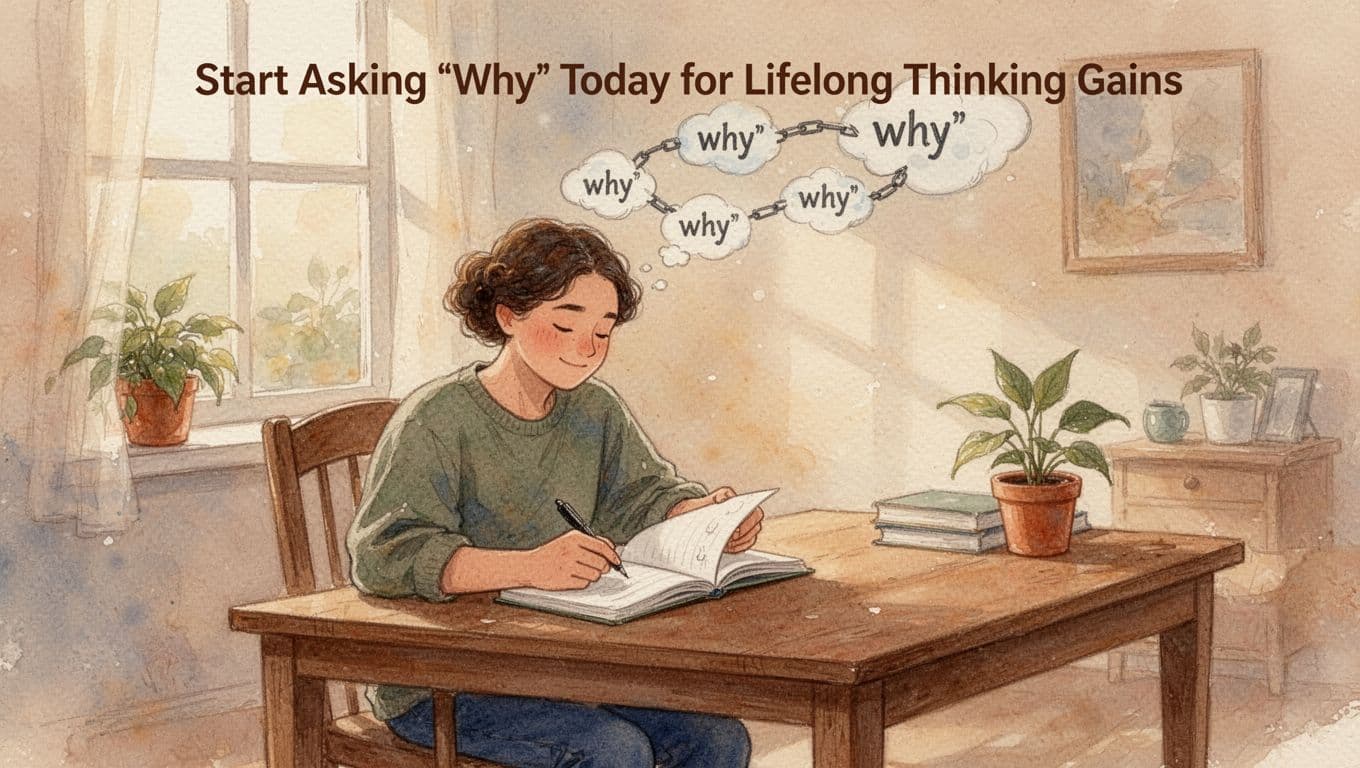
Start Asking ‘Why’ Today for Lifelong Thinking Gains
You have the tools now. Start asking “why” today. This habit delivers lifelong wins in thinking. Because practice builds skills better than talent alone. Studies confirm it. Over 30 reviews show steady gains from habits like questioning sources. Kids and adults alike improve reasoning through effort.
Don’t overwhelm yourself. Begin small. One “why” chain per day works wonders. Your brain adapts fast. After a week, notice clearer choices.
Easy Steps to Make ‘Why’ a Daily Habit
Build the skill with these simple actions. Pick one or two at first. Results stack up quick.
- Journal whys each evening. Note one decision from your day. Ask “why” five times. Why did I choose that route? Why traffic there? Patterns emerge. In short, you spot habits.
- Question one choice daily. Before lunch, pause. Why this meal? Why skip veggies? Small tweaks lead to better health.
- Use it in meetings. Hear a plan? Ask, “Why this approach?” Teams uncover flaws. Or at home, with kids: “Why did that happen?” They learn too.
- Parenting boost. Turn bedtime stories into questions. Why did the character act that way? Curiosity grows in them.
These steps take minutes. Yet they rewire your mind for sharper analysis.
Teacher Tips: Spark Questions with AI Help
Teachers, pair AI with “why” for student gains. Brookings Institution’s 2026 report offers smart ways. Prompt AI for open questions like “What if?” scenarios. Kids debate answers themselves.
Mix in real work. Use AI for fun starters, then ban it for core tasks. Groups check AI facts together. Spot biases fast. This builds grit and trust.
Track Progress and Stay Motivated
Log wins weekly. Note fewer snap judgments. Decisions feel solid. After seven days, your mind clears.
Practice trumps talent. PISA data proves it. Schools close gaps with targeted habits. You can too. Start now. Grab your notebook. Ask that first “why.” Gains last a lifetime.
Conclusion
Asking “why” boosts your critical thinking, sparks real curiosity, and masters tough problems.
2026 studies from EduBrain and PISA back it up.
So do pros like Elon Musk with his first principles.
You gain sharper analysis every day.
Picture yourself in March 2026.
You spot biases fast.
AI serves you, not the other way around.
Decisions flow with confidence.
That child’s wonder from the rainbow? It powers your wins now.
Pick one habit today.
Try Five Whys on a stuck problem.
What shifts for you?
This simple question unlocks your best thinking ever.