
Picture this: you stare at your screen, dreaming of launching a side business. The idea excites you at first. Then overwhelm hits hard. Tasks pile up like a mountain, and you freeze.
Everyone faces this freeze. Big problems paralyze because your brain craves simplicity. How to break any problem into smaller steps changes that. You cut stress, grab quick wins for momentum, and finish strong. This post shares a simple process, proven techniques like the 5 Whys and mind maps, plus real examples from tech and factories. You’ll walk away ready to tackle anything.
Grasp the Real Power of Splitting Problems into Bite-Sized Pieces
Big problems scare people. They seem impossible. But split them, and progress flows.
Start with less stress. Focus on one small task. Your mind relaxes because it handles chunks well. Science backs this: brains process limited info at once. Coders use it daily; they break code into functions. Business teams do the same for projects.
Early wins build momentum. Finish a tiny step, and dopamine kicks in. You want more. Over time, this snowballs into full solutions.
Clearer thinking follows. No overload means better focus. You spot issues you missed before.
It works for all types. Daily chores like cleaning the garage become lists. Complex work, such as boosting sales, turns into parts like leads or pricing.
Teams love it too. Everyone grabs a piece. Collaboration improves because roles stay clear. For more on decomposition basics, check this Miami University guide on breaking problems.
In short, splitting problems turns chaos into control.
Follow This Straightforward 5-Step Plan to Decompose Any Challenge
Anyone can use this plan. It turns giants into ants. Follow these steps, and watch problems shrink.
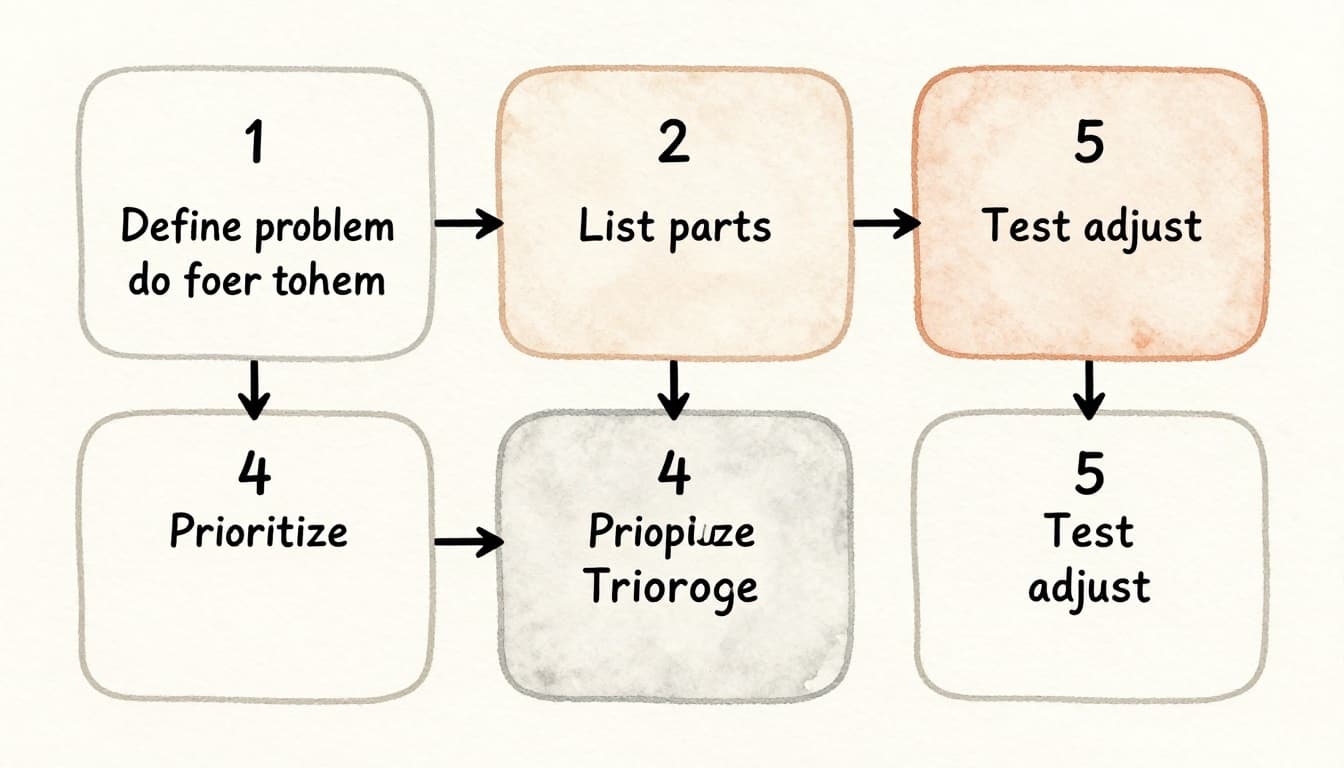
First, define the issue sharp. Next, list parts. Then chop them small. Pick order wisely. Finally, test and tweak.
Here’s a visual to guide you:
Step 1: Nail Down Exactly What the Problem Is
Ask key questions. What fails right now? What do you want instead?
Write one clear sentence. Skip vague gripes like “work sucks.” Say “sales miss goals by 20% each quarter.”
Take a car that won’t start. Pin it as “engine won’t crank.” This sharp focus stops wrong fixes. You save time and effort.
Step 2: Slice It into Key Pieces Without Overlap
Build a logic tree. Branch the main issue into causes or parts.
Cover basics: people, tools, process. For sales dips, ask: low leads? Bad close rate? High prices?
This ensures full coverage. No blind spots. Teams at the University of Iowa start here in their eight-step method.
Step 3: Chop Pieces into Doable Tasks
Go tiny. “Boost leads” becomes “email 10 prospects today.”
Use a mind map if stuck. Tackle one task per session. Momentum grows fast.
Step 4: Pick the Order That Sparks Progress
Try hardest first for big relief. Or easiest for quick confidence.
Stuck? Switch. Solo thinkers talk it out, like rubber duck debugging.
Step 5: Check Wins and Tweak as You Go
Test small changes. Measure results. Loop back if needed.
This builds smart habits. Iteration beats perfection.
Unlock Pro Techniques to Break Problems Faster and Smarter
The core plan works alone. Add these tools for speed.
Pick by problem type. Stuck on why? Dig with 5 Whys. Visual learner? Try diagrams.
In March 2026, AI trends mix language models for reasoning with world models for simulations. This decomposes complex issues automatically.
Dig Deep with the 5 Whys to Uncover True Causes
Ask “why” five times. Car won’t start? Dead battery. Why? Lights left on. Why? No habit to switch off. Why? Weak training. Why? No reminders. Why? Process gap.
Fix the root: add checklists. See full chains in these 5 Whys examples. Simple for solo or teams.
Draw a Fishbone Diagram to Spot Hidden Connections
Sketch a fish head for the problem. Bones for categories: people, machines, methods, materials.
Factory delay? Head says “late shipments.” Bones reveal supplier issues.
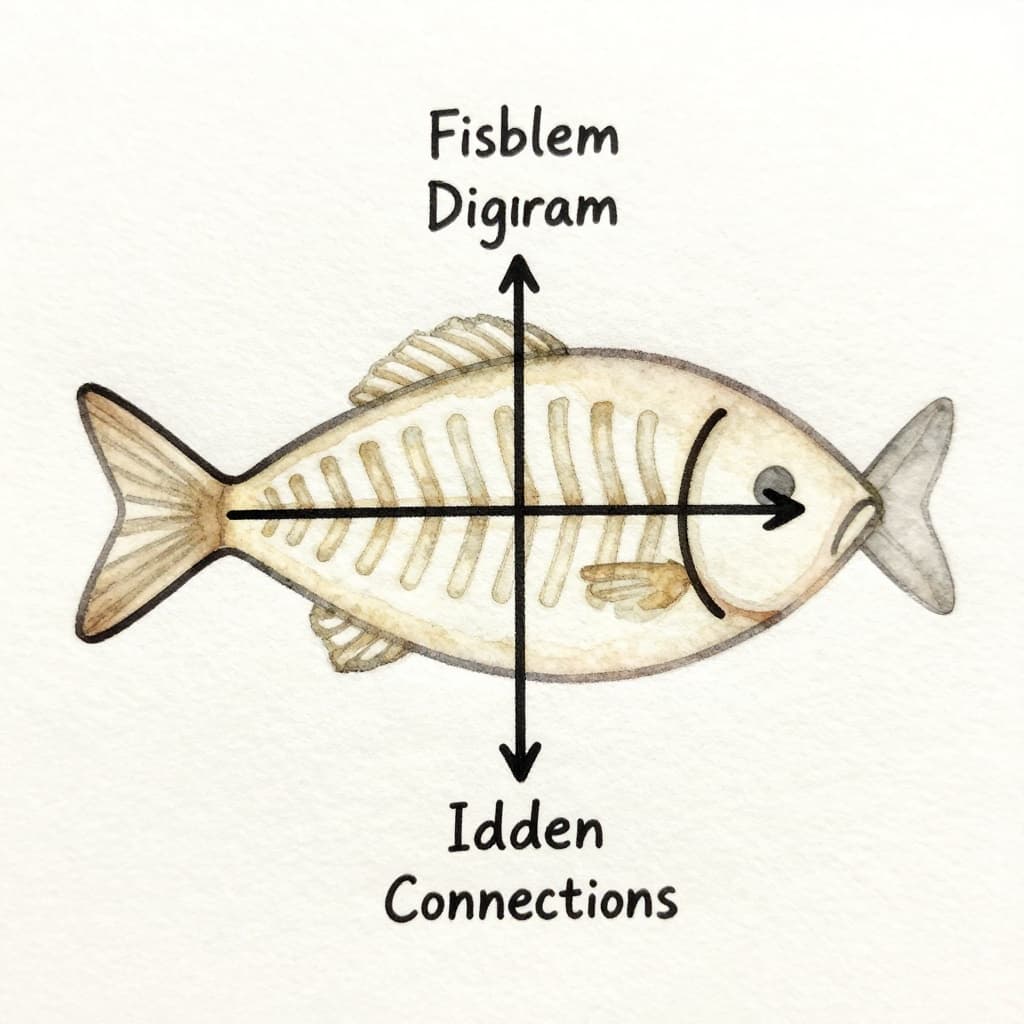
Great for visuals. Teams brainstorm fast. Check this Ishikawa guide.
Build a Mind Map to See the Big Picture Clearly
Center the problem. Branch to subparts, then tasks.
Sales issue? Center “missed targets.” Branches: leads, pricing, follow-up.
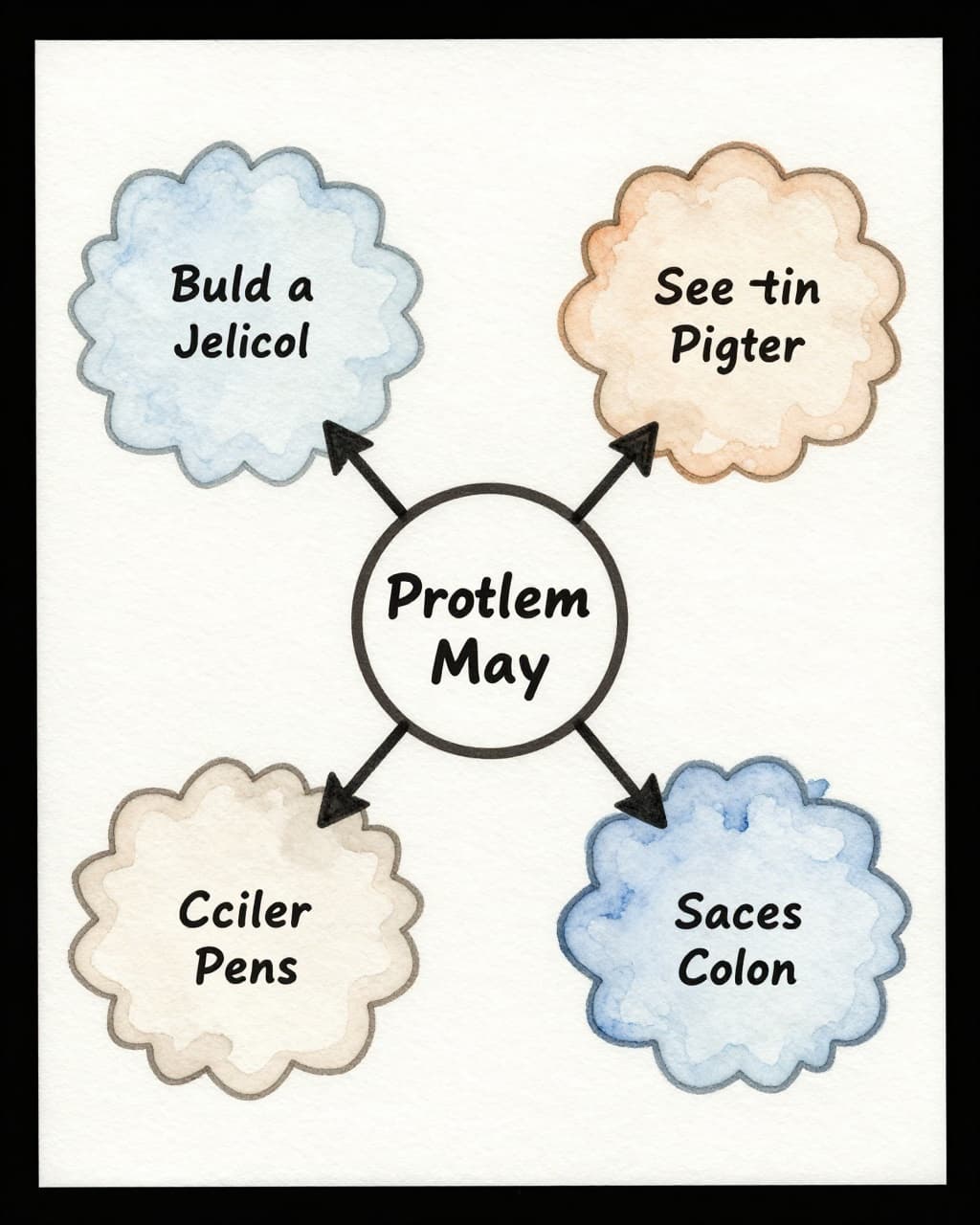
Sparks ideas. Remote teams share digitally.
Apply Six Thinking Hats for All-Angle Views
Wear one hat at a time. White for facts. Red for gut feel. Black for risks. Yellow for upsides. Green for new ideas. Blue for process.
Financial risk? Facts show numbers. Feelings spot morale dips.
Balances views. Learn more at Toolshero’s Six Hats page.
Use Cynefin Framework for Tricky Uncertain Problems
Sort issues: simple, complicated, complex, chaos.
Simple? Follow rules. Complex? Experiment safe.
2026 updates emphasize sense-making in AI eras. Details in this Cynefin guide.
Real Stories of Problem-Breaking Success in Action
Real wins inspire. See how others did it.
How a Factory Team Fixed Delays with Root Cause Hunting
Tech factories fight old systems and supply chaos in 2026. One team faced shipment delays.
5 Whys hit training gaps, not machines. They added sessions. Production smoothed.
A Developer’s Trick for Untangling Messy Code
Code tangled like knots. Dev picked hardest bug first, talked to a rubber duck.
Quick fixes snowballed. Project shipped on time.
Financial Pros Build Better Safety Nets
Risk loomed big. Six Hats gave full views: facts, risks, ideas.
They built buffers. Losses dropped 30%.
You can match these. Start small.
Common Traps to Dodge and Habits to Build for Lasting Wins
Skip defining? You fix wrong things. Chunks too big? Overwhelm returns. No tests? Loops trap you.
Dodge by practicing daily. Break chores first. Team up for big ones. Apps help with maps.
Build habits: weekly reviews. Track wins. Momentum sticks.
Ready to Crush Your Next Problem?
Splitting tasks cuts stress and builds wins. Use the five steps. Grab tools like 5 Whys or mind maps.
Pick one issue now. Apply the plan. Share your story in comments.
Transform overwhelm into action. You’ve got this. Download a free checklist to start.