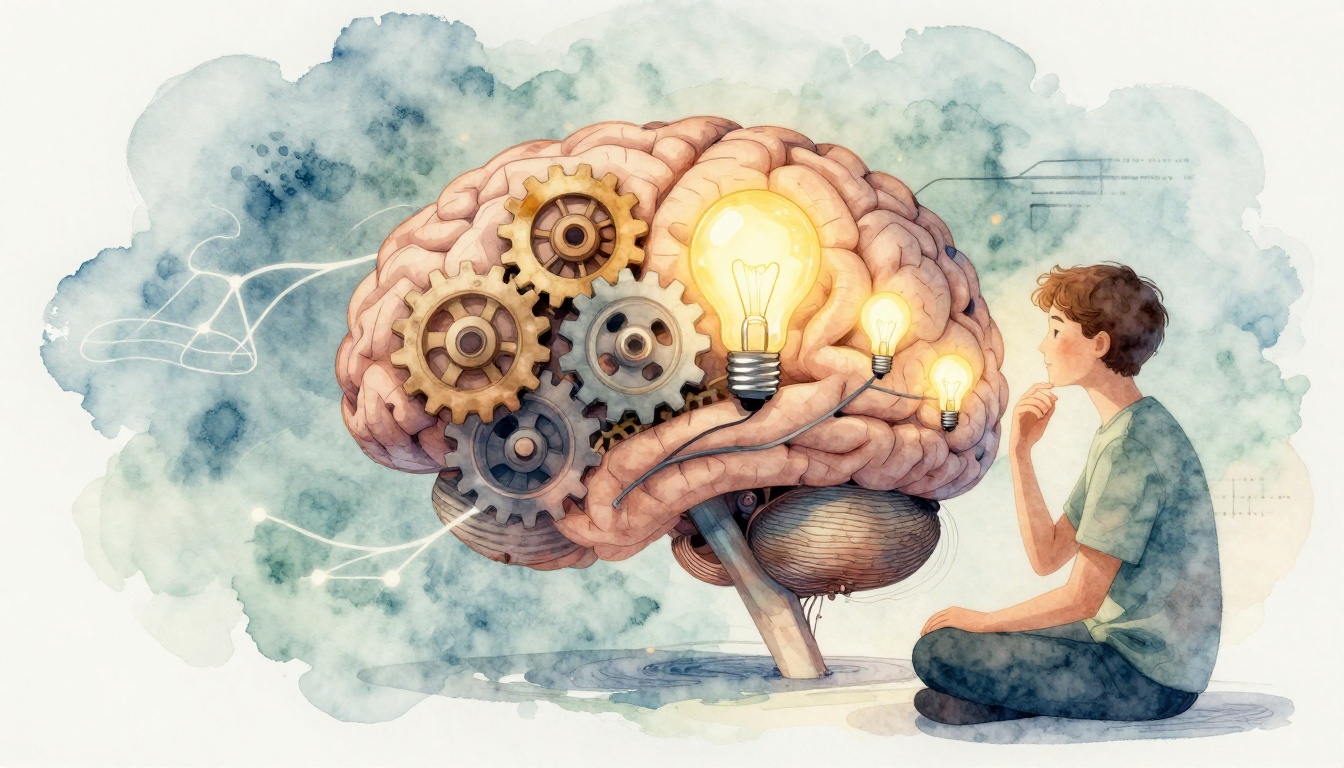
Did you know a 2026 study across 12,000 students in 27 schools found that thinking routines boosted critical thinking by 21% and curiosity by 20% right away? Daily practice pushed growth to 40% or more in key skills, nearly 50% in compassion and commitment. So better thinking beats rote memorization hands down.
You’ve crammed for hours, but stuff slips away fast. That’s because passive repetition builds weak connections in your brain. Instead, smarter processes like metacognition (tracking your own thoughts) and active recall make learning stick quicker and deeper. You don’t need more time; you need better habits.
Most people overlook this. They grind away without questioning how they learn. As a result, progress stalls, frustration builds, and goals feel out of reach.
In this post, you’ll discover key mindset shifts to rewire your brain for speed. Next, proven techniques backed by research, like those from the Nord Anglia study. Then, easy daily habits that fit any schedule. Finally, a simple action plan to double your results.
Apply these today, and you’ll notice sharper recall and faster understanding in days. Let’s get started.
Shift Your Mindset to Unlock Faster Learning
You want to learn faster. Start by changing how you think about learning itself. This builds a strong base for speed because it spots weak spots early. Passive reading just skims the surface. Active mindset shifts, however, create real progress. Research shows gains of 20 to 30 percent in understanding. For example, a Nord Anglia study with Boston College found metacognition boosted skills up to 72 percent.
These tools beat endless rereading. They make you aware and precise. You gain confidence fast. Let’s break it down.
Monitor Your Thoughts with Metacognition
Think about your thinking. That’s metacognition. It helps you catch confusion before it grows.
Pause during study sessions. Ask yourself two key questions: “Do I really get this?” and “What’s confusing me?” In math, stop after a problem. Does the equation make sense, or do you just plug in numbers? For languages, after flashcards, test if you can use the word in a sentence.
A 2026 review of 12 studies showed this fixes learning gaps quickly. Students improved math achievement because they planned, monitored, and adjusted strategies.
Try a 2-minute daily journal. Note what clicked and what didn’t. Ask: “What worked today? How can I fix tomorrow?”
This builds speed and confidence. You waste less time on dead ends. Instead, you push forward stronger.

Break Ideas into Basics Using First Principles
Strip topics to their core truths. Then rebuild from there. Elon Musk does this. He questions assumptions and starts fresh.
Take physics. Don’t memorize formulas. Ask: What are the basic laws of motion? Newton’s ideas form the base. Build up from speed, force, and gravity. You see connections clearly.
This cuts mistakes. You avoid wrong shortcuts. Insights stick because they make sense at the root.
Benefits include deeper grasp and quicker recall. It sparks creativity too.
Quick exercise: Pick a topic now, like coding a website. List five basic truths. (HTML structures pages. CSS styles them.) Rebuild the idea step by step. See how it simplifies?
Daily reflection helps. Ask: “What basics did I ignore?” This mindset doubles your learning speed over time.
Master These Techniques to Remember More in Less Time
You’ve built a solid mindset base. Now add hands-on methods that science backs. These beat cramming because they strengthen memory links instead of temporary illusions. Ever forget what you crammed the night before? That’s massed practice failing you. Active recall, spaced repetition, self-explanation, and interleaved practice fix that. A 2026 review shows active recall plus spaced repetition boosts retention to 80 percent, versus 30 percent from rereading. Pick two to start today. You’ll see sharper recall fast.
Pull Info from Memory with Active Recall
Quiz yourself without notes. This forces your brain to retrieve info, building strong pathways. Crammers feel confident but forget fast. Active recall delivers real results.
Research confirms it. Students testing themselves remembered twice as much after a week, per a StudyBoost guide on active vs. passive recall. Another study found 50 percent better retention over rereading.
Use flashcards or apps like Quizlet. Cover answers first. Write what you recall.
Here’s a simple routine:
- Read new material for 20 minutes.
- Close the book. List key facts on blank paper.
- Check accuracy. Note misses.
- End every session with a five-minute self-test.
Picture studying history dates. Don’t reread timelines. Test: “What happened in 1776?” Say it aloud. Gaps show up quick. Do this daily. Your brain adapts, and info sticks longer.
Review Smartly with Spaced Repetition
Space out reviews over time. Hit material today, then in two days, a week later. This fights the forgetting curve better than all-night sessions.
Why? Cramming overloads short-term memory. Spaced practice cements long-term storage. A 2026 pharmacy study saw huge gains with apps like Anki over traditional methods.
Anki schedules reviews automatically based on how well you know each card. Download it free. Input facts front and back.
Follow these intervals:
- Review right after learning.
- Again in two days.
- Then one week.
- Extend to two weeks if solid.
For vocabulary, add words daily. Anki prompts the tough ones more. After a month, you’ll recall effortlessly. Students in medical school boosted scores this way, as Springer research on Anki shows.
Teach Concepts in Your Own Words
Pretend you teach a kid the idea. Explain simply. This uncovers gaps you miss when reading.
Self-explanation generates connections. A meta-analysis of 64 studies found it powers understanding, per BPS research digest.
Pair it with active recall. After quizzing, rephrase: “Photosynthesis is like a plant’s kitchen. It uses sunlight…”
Steps to try:
- Pick one concept.
- Close sources. Teach aloud or write it.
- Spot confusion? Go back and fill holes.
- Test yourself again.
In coding, explain loops as repeating chores until done. Gaps appear fast. Do this 10 minutes per topic. Knowledge deepens quick.
Mix Topics for Flexible Thinking
Shuffle problems from different areas. Don’t block one type. This builds discrimination skills for real-world use.
Interleaving shines in math or skills. Studies show 40 percent better problem-solving than blocked practice. You learn to spot patterns across topics.
A PMC study on category learning highlights benefits for flexible thinking.
Practice like this:
- Gather 20 math problems: algebra, geometry, calculus.
- Mix them randomly.
- Solve in shuffled order.
- Review errors together.
For languages, alternate grammar, vocab, listening. Brains adapt better. Switch midway through sessions. Results build over weeks.
Start with active recall and spaced repetition. Track progress in a journal. You’ll learn twice as fast soon.
Build Habits That Keep Your Brain Sharp Daily
Daily routines sharpen your brain like a knife on a whetstone. They pair perfectly with active recall and spaced repetition from earlier. Combine them, and you double results, as recent guides suggest. Forget multitasking; it scatters focus and slows progress. Instead, pick one habit per session. Busy parents or workers can start with five-minute bursts. These build recall, creativity, and speed without extra hours.
Visualize Connections with Mind Maps
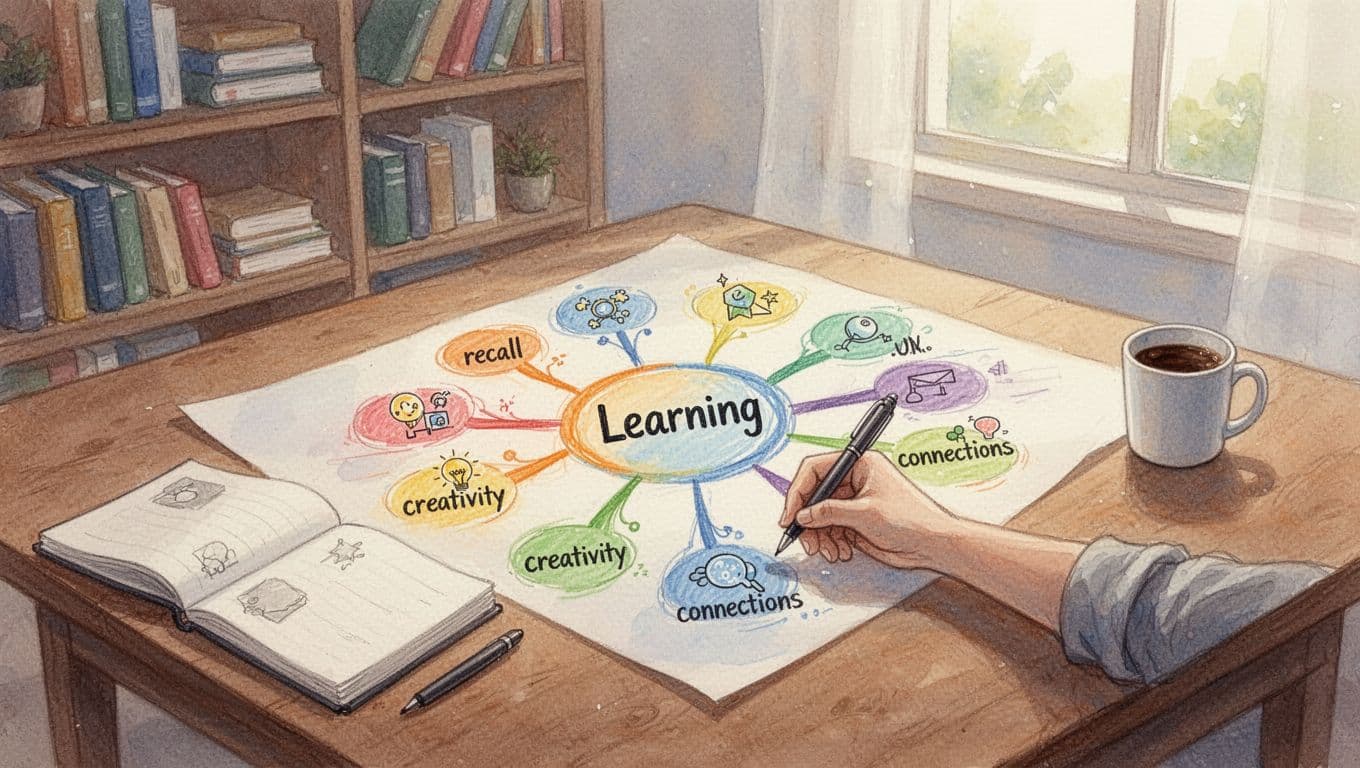
Draw mind maps to link ideas visually. Your brain loves images and branches over flat notes. Studies show this boosts creativity and recall by about 10 percent.
Start simple. Grab paper and a pen. Place the main idea in the center, like “photosynthesis.” Add thick branches for key parts: sunlight, water, carbon dioxide. Then curve thinner lines for details, with colors and doodles. Handwritten versions work best because they engage your hand-brain connection.
For example, map a history chapter. Center “World War II.” Branch to causes, leaders, battles. Icons like a tank or flag make it stick. Review by tracing paths aloud.
This habit fights forgetting. It sparks fresh insights too. Check out 12 benefits of mind mapping for more proof. Do one map daily after studying. You’ll recall details faster next session.
Engage Deeply Through Active Reading
Passive skimming wastes time. Active reading pulls you in, so ideas stick. Underline key phrases. Summarize each page in your words. Question the text: Why does this matter? How does it connect?
Pair it with handwritten notes. Jot margins or a separate page. This doubles retention over typing, because writing slows you down to think.
Try this on a textbook. Read a paragraph. Underline facts. Write: “Main point: X because Y.” Ask: “What if Z?” For busy schedules, hit one page in five minutes.
Recent tips link it to mind maps. Sketch branches right in notes. As a result, comprehension jumps. See active reading techniques for better retention. Practice nightly. You’ll grasp complex topics quicker.
Tackle Hard Parts First Then Step Back
Stuck on tough spots? Use the hard start technique. Dive in for five minutes intensely. Then switch to diffuse mode: take a walk or shower. Your subconscious solves it while you relax.
Barbara Oakley teaches this in learning guides. Focused effort plants seeds. Diffuse time connects dots. Avoid easy parts first; they trick you into false confidence.
For math problems, attack the hardest equation right away. Scribble ideas. Set a timer. Step away for 10 minutes. Return fresh; answers often click.
Combine with teaching others later. Explain the solution simply. This cements it. Workers, do it during lunch breaks. Progress speeds up because blocks vanish.
Sharpen Focus with Quick Mindfulness
Clear mental fog fast. Sit for five minutes. Breathe deep: in for four, hold four, out four. Link new info to your life. “How does this algebra help my budget?”
Add basics: seven to eight hours sleep nightly. Walk 20 minutes daily. Exercise boosts brain blood flow. Skip screens before bed.
These habits warn off distractions. Mindfulness quiets chatter, so recall sharpens. For parents, breathe while kids nap. Link stats to family trips. Sleep and moves make thinking twice as fast. Start tonight; feel the edge tomorrow.
Conclusion
Better thinking sets you apart. Mindset shifts like metacognition and first principles build awareness. Techniques such as active recall and spaced repetition strengthen memory. Habits including mind maps and active reading keep progress steady. Together, they double your speed, as the Nord Anglia study shows with up to 72% gains.
Start simple for quick wins. Pick three strategies: one mindset tool, one technique, and one habit. Day 1, journal your thoughts after a session. Day 2, quiz yourself on yesterday’s notes. Days 3-7, space reviews and track what sticks in a notebook. Small changes, big results emerge fast.
Try one tip today. Share your progress in the comments below. Which habit clicked first for you? Research backs this path, so step in now and watch learning accelerate.