
You’ve got a leaky faucet dripping all night. You grab the wrench, swap out the washer, but it still leaks. Now what? That first fix flops, and frustration sets in.
Stuck on one idea wastes time. Generating multiple solutions to one problem changes that. You try a quick patch first, then a full replacement if needed.
The SIAM study backs this up. It shows switching between two methods cuts average solve time. Picture a fast method taking time t1 and a slower one t2. If t1 is less than about 27% of t2, the average time drops below sticking to one.
Why? You spend little on the quick try before switching. This works for math problems or real life, as long as you have fast tricks in your toolbox.
Success rates climb too. Teams using multiple approaches solve issues faster and better.
Trends through 2026 confirm it. Divergent thinking explodes ideas first, then picks winners. Companies build safe spaces for wild brainstorming, boosting psychological safety.
Neurodiverse folks shine here, spotting patterns others miss. They deliver up to 140% productivity gains in creative roles.
AI hybrids take it further. Tools spot hidden links in data and run what-if scenarios. Agentic AI tests bold ideas on its own.
Pair humans with AI, and you get scalable creativity. Deloitte notes managers see the gap; these combos fill it.
Creative problem-solving like this drives innovation. It’s not magic. It’s a skill you can build.
In this post, you’ll get a step-by-step mindset shift. We’ll cover proven techniques from classics like SCAMPER to modern AI tools. Plus evaluation tips and real examples to apply right away.
Stick around. You’ll finish problems quicker and smarter.
Shift Your Mindset to Unlock Divergent Thinking
Your brain loves quick answers. It grabs the first idea and clings tight. But that habit blocks better options. Divergent thinking flips the script. You explore many paths first, then pick the winner. This approach beats single fixes every time. Studies prove it. Trying multiples cuts solve time and boosts success, just like the SIAM math shows.
Picture dinner plans with friends. One suggests pizza. Everyone nods. But what if you pause? More ideas flow: tacos, grilling out, or a picnic. Suddenly, the night improves. Workplaces see huge gains too. Teams with divergent habits spark more innovation because they dodge one-track minds.
Edward de Bono’s Six Thinking Hats method helps here. It uses parallel thinking so everyone views issues from fresh sides at once. A 2025 study on the technique found it sharpens critical skills in students. Adults gain the same edge.
Shift now. Pause before judging ideas. Say “yes, and” to build on them. You break free from traps and open doors.
Why Your Brain Defaults to Just One Answer and How to Fight It
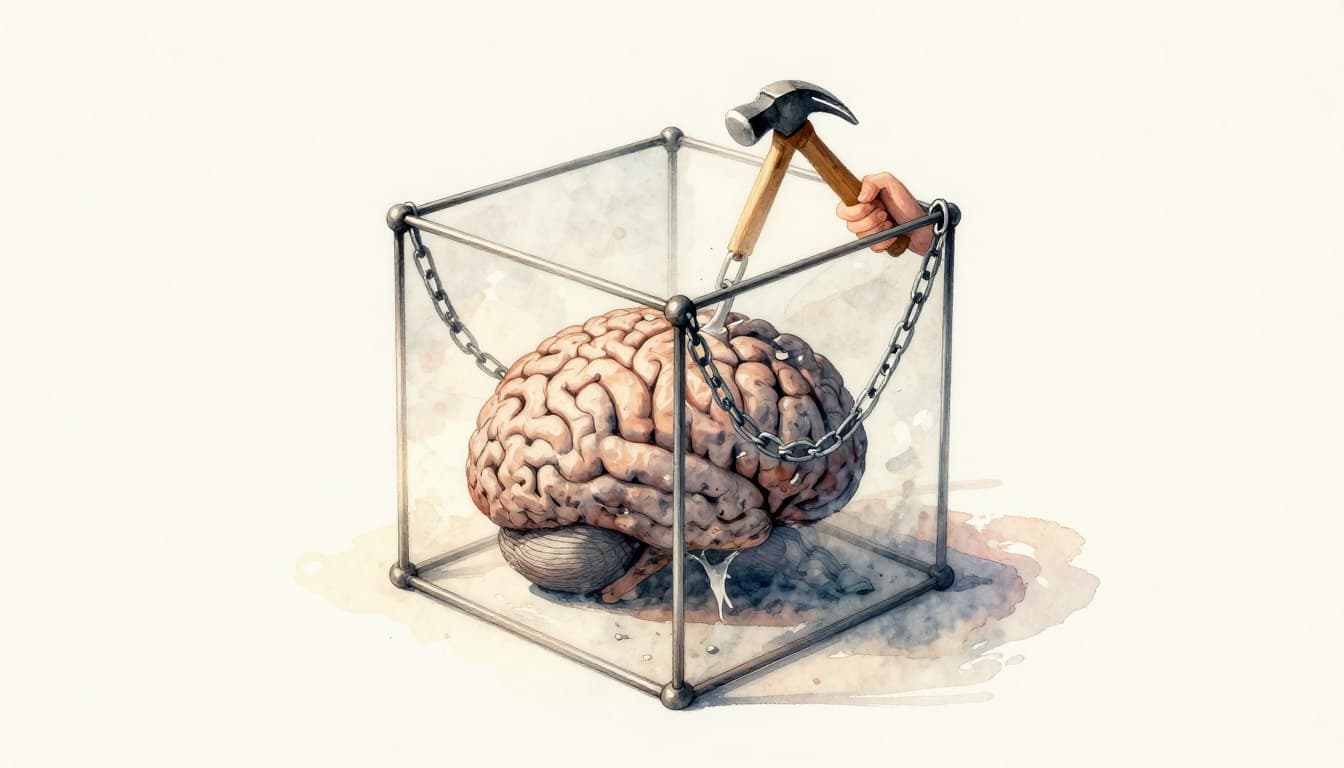
Functional fixedness traps you. You see objects only as usual tools. A hammer stays a hammer, not a doorstop. This bias locks your first thought in place. Psych Central explains it well with everyday examples. People overlook simple fixes because they fixate.
Traffic jams show this. You default to the usual route. Horns blare. Time drags. But other paths exist: side streets, buses, or biking. Your brain skips them fast.
Fight back with easy hacks. Set a goal: list 10 solutions minimum before choosing. Time-box wild sessions for five minutes. No judging allowed. Research backs this. Optimal switching gives better odds, per problem-solving studies.
A growth mindset helps too. Recent 2025-2026 data shows it turns challenges into chances. You learn from flops instead of quitting.
So next jam, breathe. Brainstorm routes. You arrive calmer and quicker.
Reframe the Problem to Spark Fresh Angles
Stuck? Ask “what if.” View from a kid’s eyes or a rival’s spot. Doors swing open. Reverse brainstorming amps it: make the issue worse first. Then flip to fixes. This sparks wild angles you miss otherwise.
Dinner again. “What if we hate cooking?” Worsens to takeout mess. Flip it: potluck where each brings one dish. Fun builds.
Steps stay simple. First, state the problem plain. Next, swap words: “increase sales” becomes “delight customers more.” Finally, borrow views. Kid asks why not? Competitor spots your blind spot.
Studies link this to gains. Divergent thinking ties to better convergent picks, per recent work. It floods options so you choose strong.
Benefits hit workplaces hard. Innovation jumps because reframing uncovers hidden wins.

Try it today. Your problems shrink when angles multiply.
Hands-On Techniques to Generate Dozens of Ideas Fast
You need ideas now. Grab a pen and paper, or rally your team. These hands-on methods crank out dozens of solutions in minutes. They mix solo tricks with group boosts. Start small, like fixing that leaky faucet from earlier. Pick one today and watch options multiply. Classics like mind maps pair with fresh twists for quick wins.
Quick Wins with Brainstorming Staples Like Mind Maps and SCAMPER
Mind maps kick things off fast. Draw your problem in the center. Branch out with related words or sketches. Add layers for details. This visual spread sparks connections your linear notes miss. Solo workers love it because setup takes seconds. For the faucet, center “drip fix.” Branch to “tools,” “materials,” “plumber,” then sub-branches like “epoxy seal” or “pressure check.”
Next, SCAMPER supercharges tweaks. It stands for Substitute, Combine, Adapt, Modify, Put to other uses, Eliminate, Reverse. List your problem’s parts first. Then fire questions at each. Supply chain snags work great here. Teams at SixSigma.us cut delays by subbing local suppliers or combining routes.
Try a product example. Say you sell coffee mugs. Substitute ceramic for bamboo. Combine with a phone stand. Adapt for travel by adding insulation. Modify size for kids. Put to other uses as planters. Eliminate the handle for stackability. Reverse by making it self-heating. Boom, eight ideas in one go.
Steps stay simple:
- Write core attributes in a grid.
- Hit each SCAMPER prompt.
- Mix wild combos.
You generate 20-plus variants fast. Best for product upgrades or service pivots. Recent tests show solo users hit four solid ideas in 30 minutes.

Team Power-Ups: Six Hats, Brainwriting, and Crazy-8s
Groups shine with structure. Six Thinking Hats assigns colors for views. White sticks to facts. Red vents feelings. Black spots risks. Yellow hunts benefits. Green brews creative leaps. Blue runs the process. Everyone wears one hat at a time. This parallel flow dodges arguments. IBM and Siemens used it for project planning, per case studies, to align diverse teams on big fixes.
Pass hats in rounds. Start with 10 minutes per color. For dinner plans, white lists options. Red shares gut likes. Black warns of allergies. You end with balanced picks.
Brainwriting quiets loud voices. Try 6-3-5: six people, three ideas each, five minutes per round. Pass sheets round-robin. Everyone builds on others silently. Zapier teams swear by it for even input. In 30 minutes, you bag 108 ideas. Perfect for introverts or remote crews.
Crazy-8s ramps speed. Fold paper into eight panels. Sketch one idea per box in eight minutes. IDEO popularized it; Google sprints still run it. Lucid’s guide shows apps or logos exploding with options. Debrief, vote with dots. Teams like AND Digital prototype customer journeys this way.
Use 1-2-4-All progression. Pairs chat first. Groups of four refine. Full team votes. Recent 2025 workshops hit diverse ideas fast, outpacing talks.
These beat solo for buy-in. Start with five people max.
Wild Cards for Breakthroughs: Reverse and Synectics
Stuck in ruts? Flip it. Reverse brainstorming asks how to make problems worse. List disasters first. Then invert to solutions. For traffic jams, worsen with more cars. Flip to carpool apps or off-peak shifts. This uncovers blind spots regular lists skip.
Synectics goes weirder with metaphors. Make familiar strange. Teams force odd links, like wet leaves stacking to Pringles cans. Fredric Baur invented stackable chips after that analogy, as noted in leadership stories. Draw random objects. Link to your issue. A tangled hose sparks flexible packaging ideas.
Run it in pairs. Pick a problem. Brainstorm 10 unrelated things. Connect boldly. Supply chains fixed delays by analogizing to ant colonies sharing loads.
Pros shine for breakthroughs. Cons? Takes practice to avoid silly tangents. Yet, start small. Pick one wild card weekly.
| Method | Best For | Time to Dozens |
|---|---|---|
| Mind Maps | Solo visuals | 10 mins |
| SCAMPER | Product tweaks | 15 mins |
| Six Hats | Team alignment | 45 mins |
| Brainwriting | Quiet groups | 30 mins |
| Crazy-8s | Rapid sketches | 8 mins |
| Reverse/Synectics | Stuck spots | 20 mins |
This table sums setups. Pick by need. Real firms like Google mix them for 2025 wins. You can too. Test on your next snag. Ideas flood in.
Boost with 2026 AI Tools and Smart Evaluation
AI tools hit peak power by 2026. They crank out ideas fast, then help you pick winners. You blend them with human smarts for real breakthroughs. No more solo struggles. These setups generate dozens of options, score them sharp, and test quick. Telecom teams cut downtime 50% this way. Let’s break it down.
How AI Supercharges Idea Generation Right Now
AI acts as your brainstorming buddy. Tools like Miro and Claude auto-generate grid combos from prompts. You input a problem, like supply chain snags. It spits out SCAMPER variants: substitute local parts, combine routes, adapt for weather. Speed wins big; you get 50 ideas in minutes. Volume floods your options too.
Trends push further. Context memory in Storyflow recalls your full project history. It suggests tailored twists, not generic lists. AI agents run Delphi-like expert sims, polling virtual pros for consensus. In semiconductors, predictive modeling blends with DMAIC. Factories boost yields 20% by spotting defects early.
However, AI lacks raw spark sometimes. Human creativity adds the wild edge. So generate with AI first. Then filter yourself. For example, prompt Perplexity for “SCAMPER on leaky faucet.” It lists epoxy seals or pressure valves. You tweak for fit.
Teams love visuals. Midjourney turns text into concept art, sparking more. Remote groups in Mural vote live. Check 13 best AI brainstorming tools reviewed in 2026 for picks.

Start simple. Type your issue into Claude. Watch ideas explode. You save hours and spot gems.
Score and Test to Find Your Best Bets
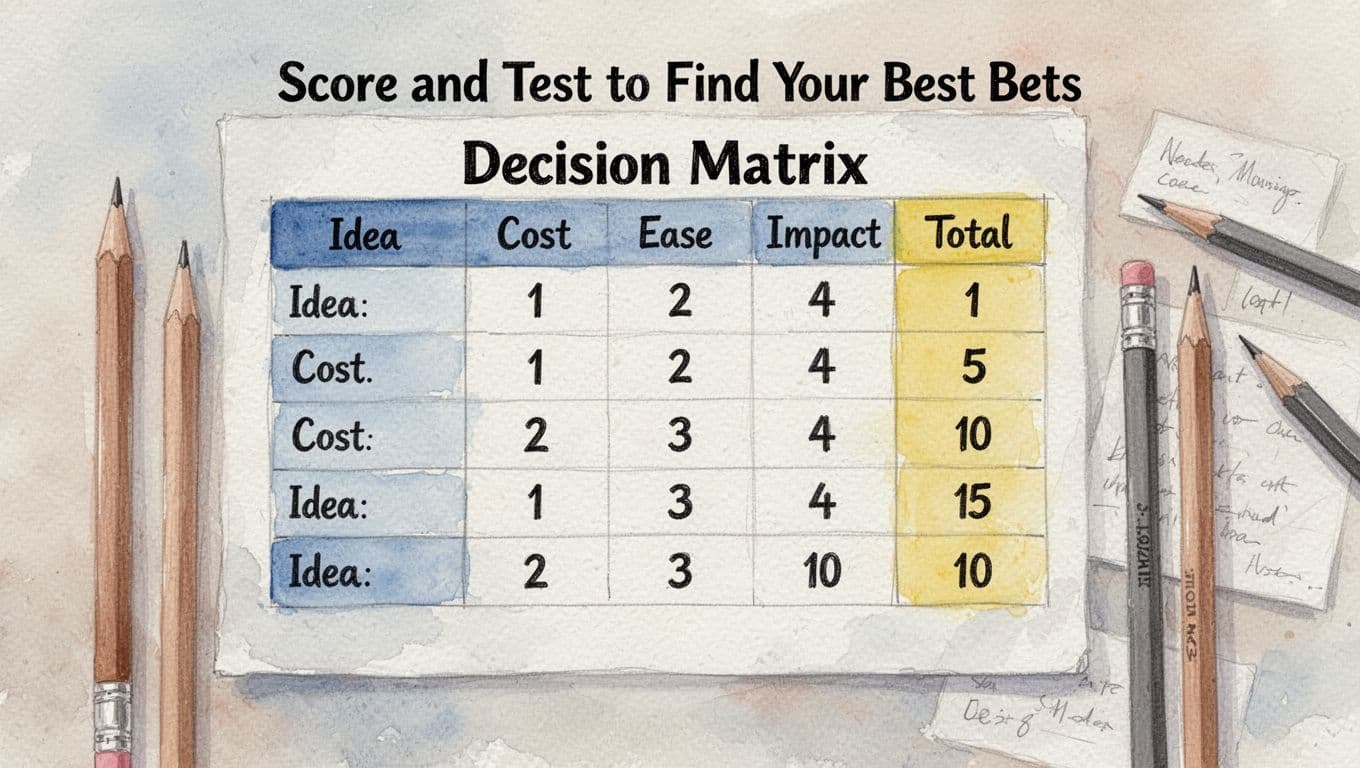
Narrow 20 ideas to top three fast. Build a decision matrix first. List criteria: cost, ease, impact. Score each 1-10. Total them up. Here’s a quick example for faucet fixes.
| Idea | Cost (1-10) | Ease (1-10) | Impact (1-10) | Total |
|---|---|---|---|---|
| Epoxy seal | 9 | 8 | 7 | 24 |
| Pressure regulator | 7 | 6 | 9 | 22 |
| Full replacement | 5 | 4 | 10 | 19 |
Epoxy tops it. Low cost, simple do. Add Nominal Group next. Everyone ranks silently, then discusses. Avoids groupthink.
Prototype quick after. Test small: apply epoxy on one spot. Measure drip drop. Tech forecasts shine here too. AI predicts outcomes, like in DMAIC for chips.
Real wins prove it. Vodafone slashed 5G downtime with AI sleep modes, saving 33% power daily. AT&T autonomous agents fix networks proactive. You get similar cuts.
Steps stay tight:
- Score all ideas in matrix.
- Silent vote top five.
- Prototype and test one day max.
- Pick and roll.
For SCAMPER boosts, try Miro’s SCAMPER template. Teams narrow fast, launch strong.
Your turn. Score that list now. Best bets emerge clear.
Real-World Wins That Prove Multiple Solutions Work
Doubt the power of multiple solutions? Real companies prove it daily. They mix techniques like Synectics, Six Hats, brainwriting, and AI modeling. Results stun: faster fixes, huge savings, breakthrough products. You see gains too if you try. These stories inspire action.
Pringles Stacks Chips with Synectics Magic
Fredric Baur faced crumbling potato chips. He used Synectics, linking wet leaves that stack neatly to saddle-shaped crisps. That sparked the iconic can design. Pringles boomed because chips stayed fresh and stacked tight. Check Pringles’ stacking success story. One wild analogy birthed a snack empire. Teams still copy it for packaging wins.

Siemens Aligns Strategy Using Six Thinking Hats
Siemens tackled project chaos with Six Hats. Teams wore colors to view facts, risks, and green ideas separately. Discussions sharpened. They aligned fast on big plans, cutting delays. A detailed Six Hats workplace example shows similar boosts. Everyone contributes without fights. Siemens gained clear paths forward.
Supply Chain Teams Fix Snags via Round-Robin Brainwriting
Supply firms hit delays. They switched to brainwriting’s 6-3-5 round-robin. Six people wrote three ideas each in five minutes, passing sheets. Input flowed even from quiet folks. Routes combined, locals subbed in. Delays dropped sharp. Groups like Zapier praise it for fair shares. You get dozens of fixes silently.
Telecom Slashes Outages 50% with AI Modeling
Networks crash often. Telecoms built AI models to predict fails. They blended data with what-if tests, like DMAIC steps. One firm cut outages 50% using smart forecasts. See AI decision intelligence outage cuts. Power stayed on, costs fell. Humans picked the best from AI floods.
Start small yourself. Do Crazy-8s daily on one snag. Sketch eight fixes in eight minutes. Wins build quick. Ready to test these on your desk? Next, we’ll show how.
Conclusion
You started with that leaky faucet flop. Now you know how to flood options instead. Shift to divergent thinking, grab techniques like SCAMPER or Crazy-8s, then use AI and decision matrices to pick winners. Teams win big because they test multiples fast.
Less stress hits first. You dodge frustration from one bad fix. More wins follow, like Pringles or telecom cuts. Pick SCAMPER today on your top snag. Track results in a week. Ideas multiply, problems shrink.
What’s your problem needing multiple fixes? Share it in the comments below. Others learn too.
Grab our newsletter for more tips on smart fixes. You solve quicker from here on out.