
You wake up to a flood of work emails. Then family chores pile on top of a nagging argument from last night. Small frustrations stack up fast. They leave you overwhelmed and stuck.
These daily problems drain your energy. But 2026 research shows you can fix them with proven steps. Mental health studies highlight self-talk and input limits to cut stress. AI tools handle the rest.
This post covers spotting real issues, quick fixes, and smart tools. You’ll gain strategies to feel calmer today. Ready to take control?
Spot the Real Issue Behind Your Daily Frustrations
Problems hide behind surface chaos. You react to emails or messes without seeing the root. Pause first. That shift calms your mind and clears solutions.
Recent mental health data backs this. Negative thoughts rewire your brain for more stress. Kind self-talk changes that pattern. Start by listing your top three issues today. Pick one. This exercise focuses you.

Focus on identification here. No fixes yet. Ask yourself key questions. Cut extra noise. Talk kindly to yourself. These steps reveal the true problem.
Ask This One Question to Cut Through Chaos
Chaos hits when everything demands attention. Try this: “What’s my next right action?” It narrows your view to one step. You handle the hour or day ahead.
For example, a messy house overwhelms you. Ask the question. Your answer might be “Load the dishwasher.” Do that first. Progress builds.
Breathe deep. List three tasks. Pick the first. Studies from 2026 show this boosts happiness. It stops overload.
A work argument? Next action could be “Write one calm reply.” Small moves add up. You gain control fast.
Limit Your Inputs to Shrink Overwhelm
Too much news or scrolling spikes stress. Set limits. Check social media once daily for 20 minutes. Turn off notifications after dinner.
Device-free afternoons work wonders. Walk outside. Read a book. 2026 research from Johns Hopkins links less screen time to better well-being. Johns Hopkins media briefing on social media and mental health explains the drain.
Noise fades. Your mind quiets. Life feels manageable again. Start small. One hour off devices today.
Swap Harsh Self-Talk for Kind Words
Your inner voice criticizes after every slip. “You’re lazy.” Stop it. Thank the critic. Then switch to friend-like advice.
Spill coffee? Say, “Everyone messes up. Clean it and move on.” This kindness helps. 2026 studies show self-compassion aids goal success after fails. Scientific Reports on self-compassion and resilience confirms it buffers negative affect.
Practice daily. Notice harsh words. Flip them. You build real happiness. Stress drops as a result.
Apply Quick Fixes That Work on Everyday Problems
Spot the issue. Now act fast. Common troubles like chores or decisions need simple tools. The Eisenhower Matrix sorts them. Tiny habits stack on routines.
These fixes come from 2026 productivity research. They reduce chaos. Boost impact. Try them on stress or bad choices today.
Focus on small goals. Doable steps win. For instance, deep breaths after coffee curb anxiety.
Sort Tasks with the Eisenhower Matrix
Daily lists grow wild. Use the Eisenhower Matrix. It divides tasks into four boxes based on urgent and important.
Here’s how it works. Grab paper. Draw a square. Split into quadrants.
| Quadrant | Description | Action | Example |
|---|---|---|---|
| Urgent & Important | Deadlines hit goals | Do now | Project due today |
| Important, Not Urgent | Builds future success | Schedule | Exercise routine |
| Urgent, Not Important | Demands time, low value | Delegate | Coworker emails |
| Neither | Time-wasters | Delete | Endless scrolling |
This setup cuts chaos. A family workday might rank dinner prep as do now. Gym time gets scheduled. Delegate kid pickups. Delete extra TV.
Daily priority guide using the Eisenhower Matrix offers more examples. Focus on quadrant two. It prevents crises.
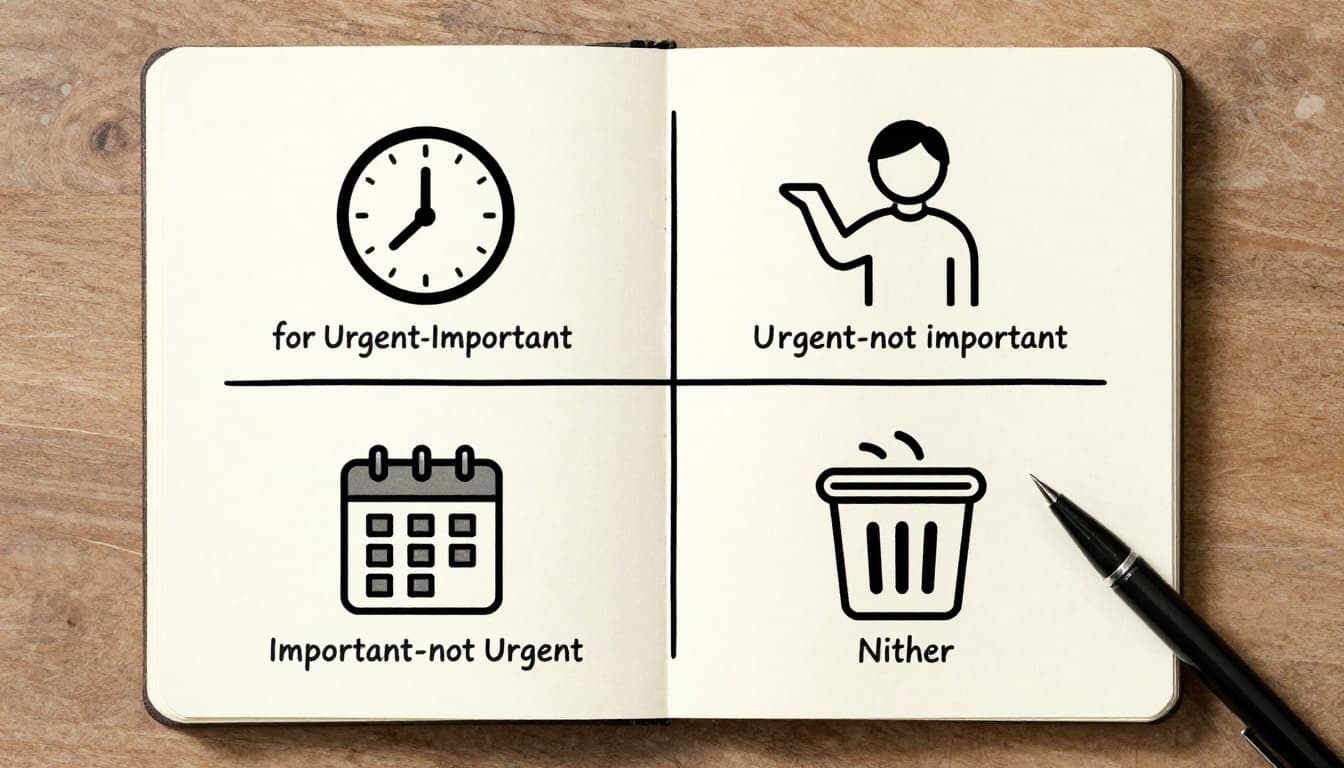
Results show up quick. Energy rises.
Stack Tiny Habits onto Your Routine
Big changes fail. Stack tiny ones instead. Link new to old. After brushing teeth, do one push-up.
Why it sticks? Brains love pairs. Coffee then one-minute breathing. Bed made then hands on hips for a breath.

Morning routine example: Bed, then breathe. Builds calm. Track one week. Consistency grows.
2026 insights prove tiny stacks beat willpower alone. Pick one today.
Leverage AI and Partners to Handle the Rest Effortlessly
Quick fixes help. AI takes more off your plate in 2026. Trends show agents manage emails and plans. Free your mind for big thinks.
Pair with buddies. Visual trackers motivate. Human-AI teams win. Avoid over-reliance. Use as helpers.
Setup stays simple. Free tools abound.

Offload Boring Tasks to AI Agents
Repetitive chores suck time. AI agents fix that. Sort emails. Plan meals. Book travel.
Motion schedules your list auto. Zapier connects apps for reports. Lightens your load.
More real ties follow. AI agents that handle real work in 2026 lists top picks. Start with one pain point.
Get Pro Results by AI-Polishing Your Messages
Draft emails or complaints. AI refines tone. Clear words get better replies.
Decide content. Paste to Claude. It polishes. Studies show pro phrasing ups success by millions in resolved issues.
Argument fix? AI suggests calm script. Practice once. Send.
Team Up with Visuals and a Buddy for Goals
Charts track habits. Apps show streaks. Pick small goals. Share weekly with a friend.
Check-ins build fire. “Hit my walks?” Yes. Motivation soars.
Visuals plus partner beat solo tries. Start a shared sheet today.
Spot issues with pauses and kind talk. Fix fast via matrices and stacks. Let AI and teams manage loads.
One tip changes your day. Try the matrix now. Share your win below.
You hold the power. These 2026 strategies give you the edge. Feel empowered yet?